
Dental Implants Penrith — Replacing Missing Teeth
A missing tooth doesn’t just affect your smile — it can change how you chew, speak and how nearby teeth shift over time. An implant restores function and helps protect your long-term oral health.

A fixed, natural-looking option for replacing missing teeth
Dental implants restore your bite, protect neighbouring teeth and bring back a confident smile.
Benefits of Dental Implants
Looks & feels natural
Custom crowns are shade-matched to your own teeth for a seamless smile.
Protects your jawbone
Implants stimulate the bone like a natural root, helping prevent bone loss.
Eat what you love
A stable, fixed bite lets you chew comfortably without slipping.
Built to last
With good care and regular check-ups, implants can last many years. How long they last varies from patient to patient.
Protects nearby teeth
Unlike a bridge, implants don't rely on grinding down healthy teeth.
Why Choose Penrith Dental Care for Your Implants?
At Penrith Dental Care, you come first. We listen carefully, explain every option in plain language, and design a dental implants plan built around your comfort, your budget and your long-term oral health — so you can smile with confidence.
Personalised care
We take the time to understand what matters to you and treat every patient with the same care we'd give our own family.
Plain-language options
We walk you through every option — including the alternatives — with no jargon and no pressure, so the final decision is always yours.
Long-term results
Gentle, unhurried treatment and careful aftercare designed to protect your smile and keep it healthy for years to come.
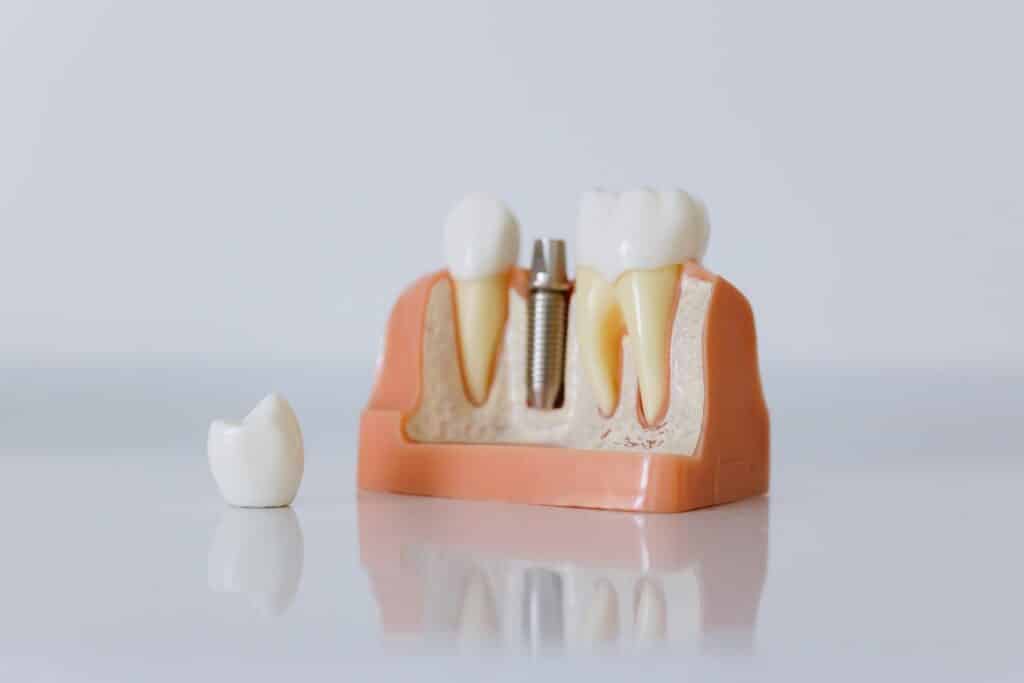
How Do Dental Implants in Penrith Work?
A small titanium post is gently placed into the jawbone to act as a new tooth root. Most patients are surprised how comfortable this step is.
Over a few months the post fuses naturally with your bone, creating a strong, stable foundation — just like a real root.
A custom-made crown is fitted on top, matched to your natural teeth so you can smile, eat and speak with confidence.

Titanium or Zirconia Dental Implants?
Most dental implants are made of titanium, which has decades of clinical research behind it and bonds well with jawbone. Zirconia implants (ceramic) are tooth-coloured and metal-free, which some patients prefer, particularly where thin gums might show a grey tinge.
Zirconia implants have less long-term research than titanium, come in fewer shapes and sizes, and aren’t suitable for every case. At your consultation, your dentist will explain which implant type suits your bone, bite and the position of the missing tooth, and why. You can also compare dental implants vs dentures.
Frequently Asked Questions
Are dental implants painful?
The area is fully numbed, so most patients feel little to no pain during the procedure. Any mild tenderness afterwards can usually be managed with simple over-the-counter pain relief.
How long do dental implants last?
With good oral hygiene and regular check-ups, dental implants can last many years, making them a long-term option for missing teeth. Read more about how long dental implants last and what affects their lifespan.
Am I a candidate for dental implants?
Most people in good general and oral health are suitable candidates. The best way to know for sure is a consultation, where we assess your gums, bone and overall health.
What is the cost of dental implants Penrith?
The cost depends on your individual needs and how many implants are involved. We’ll talk you through the full cost and payment options openly before any treatment begins.
How long does the dental implant process take?
It varies, but most implant journeys take a few months from placement to final crown, because we allow time for the implant to fuse securely with your bone. We’ll give you a clear, personalised timeline at your consultation.
Are dental implants better than dentures?
Both can replace missing teeth, but implants are fixed in place and help preserve your jaw bone, so many patients find they feel and function more like natural teeth. The right choice depends on your needs — we’ll help you weigh up the options.
Ready to Restore Your Smile?
Why an Implant Protects More Than Your Smile
A dental implant replaces the tooth root as well as the visible crown. That matters, because a missing tooth left unreplaced sets off changes you can’t see:
- The jaw bone shrinks where the tooth root used to be.
- Neighbouring teeth drift into the open space.
- Your bite changes over time, straining the remaining teeth.
By anchoring into the jaw, an implant keeps the bone stimulated and everything in its proper place — protecting your long-term oral health in a way other options can’t.
Not sure an implant is right for you? It’s worth exploring dental bridges or dentures as alternatives. For more information, visit the Australian Dental Association or Healthdirect Australia.
How much do dental implants cost in Penrith?
As a guide, a single dental implant restored with a crown in Australia typically ranges from about $4,000 to $6,500, covering the implant placement (item 688), the abutment (item 661) and the implant crown (item 672). The final fee depends on how many teeth are being replaced, whether a tooth extraction or bone grafting is needed first, and the type of restoration. We provide a written, itemised quote after your consultation and X-rays, so you know the full cost before any treatment begins. If your private health fund includes major dental cover, you can claim your rebate on the spot with HICAPS.
Implant, bridge or denture?
A dental implant is the only option that replaces the tooth root itself, which helps preserve the jawbone and does not rely on the neighbouring teeth. A bridge can be quicker and initially less expensive, but it involves reshaping the teeth either side of the gap. Dentures remain the most economical way to replace several missing teeth, though they are removable and feel less like natural teeth. At your consultation we talk through all three options honestly, including doing nothing, so you can choose what suits your mouth, health and budget.
Anxious about implant surgery?
Implant placement is routinely performed under local anaesthetic, and many patients find it more straightforward than they expected. If dental anxiety is holding you back, ask us about IV sedation as part of our comfort-focused approach.
Dental implants in Penrith: frequently asked questions
Am I suitable for dental implants?
Most adults with good general health and enough jawbone can be considered for dental implants in Penrith. We assess your gums, bite and bone with an examination and X-rays, and a 3D scan where needed. Smoking, uncontrolled diabetes and active gum disease can affect healing, so we discuss these with you first.
How long does dental implant treatment take?
Treatment usually takes several months. After the implant is placed, the bone needs time to heal around it, commonly around three to six months, before the final crown is fitted. Your timeline depends on your bone, whether a tooth needs to be removed first and whether bone grafting is required.
What affects the cost of dental implants?
The number of implants, any extractions or bone grafting, and the type of crown, bridge or denture attached all affect the cost. We provide a written quote with item numbers before treatment starts.
Any surgical or invasive procedure carries risks. Before proceeding, you should seek a second opinion from an appropriately qualified health practitioner.
Related Treatments
If a tooth needs to come out before an implant is placed, these pages explain the steps:
- Tooth extraction – what to expect on the day and during healing
- Dental bridges – an alternative way to replace a missing tooth
- All dental services at Penrith Dental Care
Risks and complications
Dental implant treatment is surgery, and like any surgery it carries risks. Your dentist will discuss these with you before treatment. They include:
- pain, swelling and bruising after surgery
- infection around the implant
- nerve irritation or injury, which can cause numbness or tingling in the lip, chin or tongue
- sinus involvement for implants in the upper jaw
- the implant not fusing with the bone, or loosening later, which may mean it needs to be removed or replaced
- gum and bone inflammation around the implant (peri-implantitis) over time
- needing a bone graft first if there is not enough bone
Smoking, uncontrolled diabetes and gum disease can increase these risks. You will receive a written treatment plan and cost estimate before any treatment begins.
Important: Any surgical or invasive procedure carries risks. Before proceeding, you should seek a second opinion from an appropriately qualified health practitioner. Individual results vary.