
Tartar, also called dental calculus, is plaque that has hardened on the teeth. Once plaque has turned into tartar it cannot be brushed or flossed off at home. It has to be removed by a dental professional. This guide explains what tartar is, why it builds up, why it matters and how to slow it down.
What is tartar on teeth?
Plaque is a soft, sticky layer of bacteria that forms on teeth every day. If plaque is not cleaned away, minerals in your saliva harden it into tartar. Tartar is a rough, chalky deposit that is usually yellow or brown. It forms above the gum line, where you can see it, and below the gum line, where you cannot.
Tartar builds up fastest where saliva enters the mouth: behind the lower front teeth and on the cheek side of the upper back teeth.
Plaque and tartar: what is the difference?
- Plaque is soft and colourless. You can remove it yourself by brushing twice a day and cleaning between your teeth.
- Tartar (calculus) is hardened, calcified plaque. It is bonded to the tooth and needs professional instruments to remove.
What causes tartar buildup?
Tartar forms wherever plaque is left in place for long enough. It builds up more quickly if you:
- miss areas when brushing, especially along the gum line and behind the lower front teeth
- do not clean between your teeth
- have crowded or overlapping teeth that are hard to clean
- have a dry mouth
- smoke
Some people simply form tartar faster than others, even with good brushing, because of the make-up of their saliva.
Why tartar buildup is a problem
Tartar has a rough surface that holds more plaque against the teeth and gums. Over time this can lead to:
- red, swollen or bleeding gums (gingivitis)
- gum disease that damages the bone supporting the teeth (periodontitis)
- bad breath
- yellow or brown staining that brushing does not shift
Gingivitis can be reversed with professional cleaning and good home care. Periodontitis can be controlled but not cured, which is why removing tartar regularly matters.
How is tartar removed?
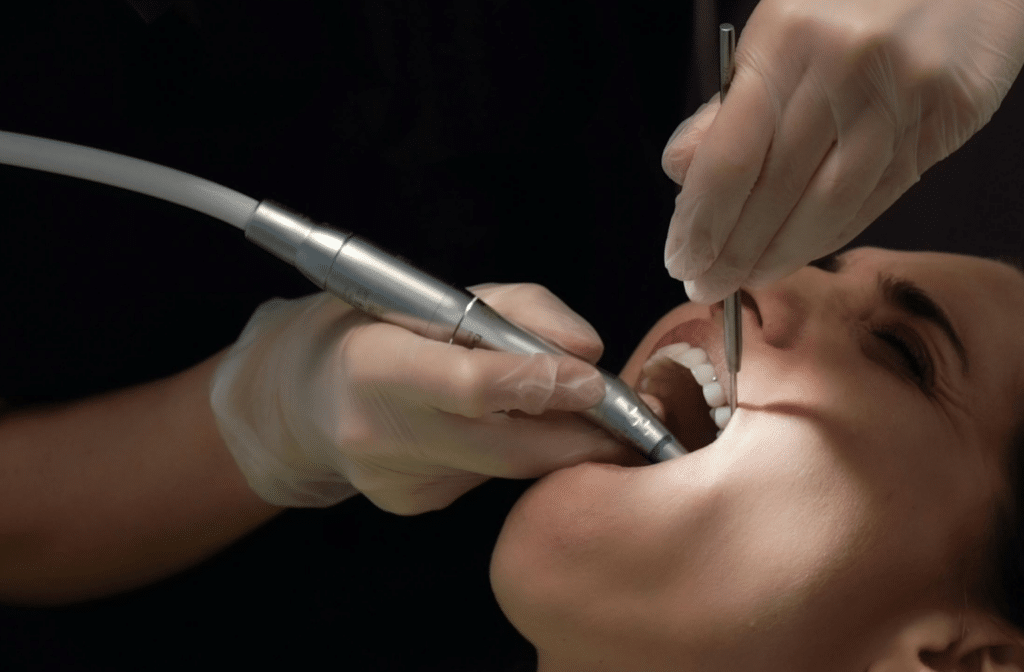
Tartar is removed during a professional scale and clean. Your dentist or oral health therapist uses an ultrasonic scaler and fine hand instruments to lift the deposits from above and just below the gum line, then polishes the teeth to leave a smooth surface that plaque sticks to less easily. We also use Airflow cleaning to remove plaque and surface stain.
Do not try to scrape tartar off at home. Metal scrapers sold online can scratch enamel and cut the gums, and they cannot reach the tartar under the gum line that does the most harm.
How to slow tartar buildup
- Brush twice a day for two minutes with fluoride toothpaste, angling the bristles towards the gum line.
- Clean between your teeth once a day with floss or interdental brushes.
- Have a check-up and professional clean every six to twelve months, or as often as your dental practitioner recommends.
- If you smoke, stopping helps your gums as well as your general health.
Tartar FAQs
Can tartar be removed at home?
No. Brushing and flossing remove plaque but not tartar. Hardened plaque needs professional cleaning.
Does tartar removal hurt?
Most people find a scale and clean comfortable. Teeth can feel sensitive for a day or two afterwards, especially if there was a lot of buildup. If you are worried, tell us and we can numb the area.
Can tartar break off by itself?
Small pieces occasionally chip away, particularly behind the lower front teeth. The rest stays attached and still needs to be removed.
Is hard plaque the same as tartar?
Yes. Hard plaque, calcified plaque, tartar and calculus are all names for the same thing.
How often should tartar be removed?
For most people, every six to twelve months. People who build up tartar quickly or who have gum disease may need cleaning more often.
Book a scale and clean in Penrith
If you can see or feel hard buildup on your teeth, or your gums bleed when you brush, book a scale and clean at Penrith Dental Care. You can also read about gum disease treatment or contact us to make an appointment.
Source: Healthdirect Australia, Gum disease (last reviewed February 2025); Healthdirect Australia, Dental care and teeth cleaning (last reviewed November 2024). This article is general information only and does not replace an assessment with a registered dental practitioner.
Looking for more dental health tips? Browse all articles on the Penrith Dental Care blog, or meet the Penrith Dental Care team. Have a question? See our dental FAQ.
Reviewed by Mina Gibryal, Penrith Dental Care, October 2026. This article is general information and does not replace advice from your own dental practitioner.