
Inlays and Onlays Penrith
Inlays and onlays Penrith patients at Penrith Dental Care receive natural-looking restorations that repair moderate tooth damage from cavities or cracks. These custom-made inlays and onlays Penrith restorations are designed to restore the structure and function of your teeth while preserving as much healthy enamel as possible.
What Are Inlays and Onlays?
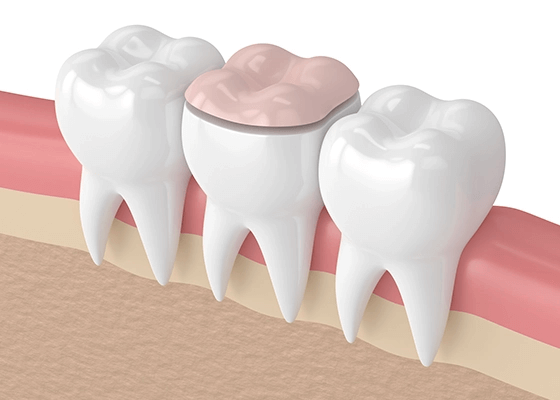
Inlays and onlays Penrith are indirect restorations used to repair moderately damaged teeth. They are made from high-quality materials like porcelain, composite resin, or gold and are custom-fitted to match the shape and color of your natural teeth.
- Inlays : Fit within the cusps (raised edges) of the tooth, typically replacing large fillings.
- Onlays : Extend over one or more cusps, covering a larger area of the tooth.
Why Choose Inlays and Onlays?
- Preserves Healthy Enamel : Unlike crowns, inlays and onlays require minimal removal of natural tooth structure.
- Durable and Long-Lasting : Made from strong materials, they can last 10-15 years or more with proper care.
- Natural Appearance : Custom-designed to blend seamlessly with your existing teeth.
- Strengthens Teeth : Provides structural support and prevents further damage.
- Comfortable Fit : Precise craftsmanship ensures a snug fit for optimal comfort.
The Process
- Your dentist will remove decayed or damaged portions of the tooth.
- An impression is taken to create a custom inlay or onlay.
- A temporary restoration is placed to protect the tooth while the long-term restoration is being crafted.
- The temporary restoration is removed, and the long-term inlay or onlay is fitted and adjusted for comfort.
- Once satisfied with the fit, it is bonded securely into place using dental cement.
Tips for Maintaining Your Inlays and Onlays
- Brush Twice Daily : Use fluoride toothpaste to maintain oral hygiene.
- Floss Regularly : Clean between teeth to prevent plaque buildup.
- Avoid Hard Foods : Don’t bite down on hard objects like ice or nuts.
- Visit Your Dentist Regularly : Schedule routine check-ups to monitor the condition of your restorations.
Benefits of Inlays and Onlays
Strengthens Damaged Teeth
Provides structural reinforcement for weakened teeth.
Preserves Healthy Enamel
Minimizes the removal of natural tooth structure compared to crowns.
Long-Term Solution
With proper care, inlays and onlays can last over a decade.
Aesthetic Appeal
Matches the color and texture of your natural teeth for a seamless look.
Prevents Further Damage
Reduces the risk of cracks or fractures spreading.
Who Should Get Inlays and Onlays?
- Have moderate tooth decay or damage not severe enough for a crown.
- Want a durable and aesthetic alternative to traditional fillings.
- Need to repair cracked or fractured teeth.
- Wish to preserve as much healthy tooth structure as possible.
Ready to Restore Your Smile?
Frequently Asked Questions
How long do inlays and onlays last?
Are inlays and onlays painful?
How much do inlays and onlays cost in Penrith?
Can I eat normally with inlays and onlays?
Why choose inlays and onlays
Why does it matter? Your natural teeth are designed to last a lifetime, and every millimetre of healthy tooth structure is worth protecting. That belief sits at the heart of why we offer inlays and onlays patients can rely on. When a tooth is too damaged for a simple filling but still strong enough to avoid a full crown, inlays and onlays treatments let us repair the tooth while preserving as much of your natural structure as possible. We believe conservative, tooth-preserving dentistry leads to healthier smiles for longer, and inlays and onlays restorations are one of the clearest expressions of that philosophy.
Missing or heavily damaged tooth structure can affect far more than appearance. It can change the way you bite, chew, and speak, and it can place uneven stress on neighbouring teeth. By choosing inlays and onlays care that is precise and custom-made, you protect the long-term health of the whole mouth, not just a single tooth. According to general guidance from the Australian Dental Association, preserving natural tooth structure and maintaining regular dental visits are central to lasting oral health, which is exactly the principle behind our inlays and onlays approach.
How inlay and onlay treatment works
How we do it is what sets a quality result apart. Inlays and onlays restorations are indirect restorations, which means they are crafted outside the mouth to fit your tooth exactly, then bonded securely into place. An inlay fits within the cusps of a tooth, while an onlay extends over one or more cusps to rebuild a larger area. Because each inlays and onlays restoration is made to measure, the fit is more precise than a standard filling and far gentler on healthy tooth structure than a crown.
The process usually takes two visits. During the first visit we carefully assess the tooth, remove any decay or old filling material, and take a detailed impression or digital scan. This information is used to create your custom inlays and onlays restoration from durable porcelain or composite material chosen to match your natural teeth. A temporary covering protects the tooth while your restoration is being made.
At the second visit, we check the fit and colour of your inlays and onlays restoration, make any fine adjustments, and bond it permanently into place. The result is a strong, natural-looking repair that blends seamlessly with your smile. Throughout every step, our team explains how inlays and onlays treatment is progressing so you always understand what is happening and why. We also take time to answer your questions, because informed patients make confident decisions about their care.
What inlays and onlays offer
What you actually receive is a restoration that combines strength, longevity, and a natural appearance. Inlays and onlays restorations are known for their durability, often lasting ten to fifteen years or more with good care. Because they are bonded to the tooth, they help reinforce the remaining structure rather than weakening it, which is a key advantage of inlays and onlays treatment over large traditional fillings.
Patients choose inlays and onlays options for several reasons: they preserve more natural tooth than a crown, they resist staining and wear, and they are custom-shaded to match surrounding teeth. They are an excellent choice for moderately damaged molars and premolars that take on heavy chewing forces. If you have a cracked filling, a fractured cusp, or a tooth that has been weakened by repeated dental work, inlays and onlays restorations may be an ideal long-term solution. Compared with a large composite filling, an inlays and onlays restoration distributes biting forces more evenly and is less likely to fail under pressure over time.
Who should consider an inlay or onlay
Inlays and onlays treatment is well suited to anyone with moderate tooth damage that falls between a filling and a crown. You may be a good candidate if you have a large old filling that needs replacing, a tooth with a cracked or worn surface, or decay that is too extensive for a simple filling but has not reached the point of requiring a full crown. During your consultation we assess your oral health and explain whether inlays and onlays care is the most appropriate path for your situation. We always present the most conservative option first, because protecting your natural teeth is our priority.
Caring for your inlay or onlay
Looking after your inlays and onlays restoration is straightforward and mirrors good everyday oral care. Brush twice a day with fluoride toothpaste, clean between your teeth daily, and avoid biting down on very hard objects such as ice or pen lids. Regular check-ups allow us to monitor your inlays and onlays restoration and the surrounding teeth so that small issues are caught early. With consistent care, your inlays and onlays restoration can protect and strengthen your tooth for many years, giving you a confident, comfortable bite every day.
Book an inlay or onlay consultation in Penrith
If you would like to understand whether inlays and onlays treatment is right for you, our team is here to help. We will examine your teeth, talk through your options, and recommend the most conservative, effective approach for your smile. Contact Penrith Dental Care today to arrange your inlays and onlays consultation and take the next step toward a stronger, healthier, natural-looking smile that you can feel proud of for years to come.
Inlays and Onlays Compared With Other Options
Understanding where inlays and onlays treatment fits among your choices helps you make a confident decision. A standard filling is ideal for small areas of decay, but when a larger portion of the tooth is affected, a filling can weaken over time. A full crown, on the other hand, requires removing a significant amount of healthy tooth. Inlays and onlays restorations sit comfortably in between, repairing meaningful damage while keeping more of your natural tooth intact. This middle path is why inlays and onlays care is often described as the conservative choice for moderate damage.
When you compare materials, modern porcelain used for inlays and onlays restorations is both strong and beautiful. It mimics the translucency of natural enamel, resists staining, and stands up well to the forces of chewing. Composite resin is another option for inlays and onlays treatment, offering a more economical choice in some cases. During your visit we discuss which material suitable suits your tooth, your bite, and your goals, so your inlays and onlays restoration is tailored to you.
How Long Do Inlays and Onlays Last
One of the most common questions we hear about inlays and onlays treatment is how long the results last. With good oral hygiene and regular dental visits, an inlays and onlays restoration can serve you well for ten to fifteen years and sometimes longer. Their longevity comes from the precise, custom fit and the strong bond that secures them to the tooth. By caring for your inlays and onlays restoration the same way you care for your natural teeth, you give it the suitable chance of a long, trouble-free life.
Your Comfort During Inlays and Onlays Treatment
We understand that some people feel anxious about dental work, which is why comfort is built into every inlays and onlays appointment. Local anaesthetic keeps the preparation stage comfortable, and our gentle, unhurried approach means you are never rushed. Many patients are surprised by how straightforward inlays and onlays treatment feels from start to finish. Our goal is for you to leave each inlays and onlays visit feeling cared for, informed, and confident in the result.
A Conservative, Long-Term Investment in Your Smile
Choosing inlays and onlays treatment is an investment in the long-term health and appearance of your smile. By protecting natural tooth structure, restoring full function, and delivering a natural look, inlays and onlays restorations support both the way your smile works and the way it looks. If you have a damaged or heavily filled tooth, talk to us about whether inlays and onlays care could be the right next step for you. Our friendly team at Penrith Dental Care is always happy to explain your options in plain language and help you choose the path that protects your smile for years to come.
Frequently Asked Questions About Inlays and Onlays
Are inlays and onlays the same as fillings? Not quite. A filling is placed and shaped directly in the mouth in a single appointment, while an inlay or onlay is custom-made in a laboratory and then bonded to the tooth. This indirect method allows for a more precise fit and a stronger result, which is why it is recommended for moderate damage rather than small cavities. The custom approach also helps the restoration blend naturally with the surrounding tooth.
Will the restoration look natural? Yes. Porcelain and composite materials are shaded to match your existing teeth, so the finished result is designed to be virtually indistinguishable from your natural smile. Most people find that once the restoration is in place, neither they nor others can tell which tooth was treated.
Is the treatment uncomfortable? The preparation stage is carried out under local anaesthetic, so you should feel little to no discomfort. Many patients describe the experience as similar to having a routine filling, and any mild sensitivity afterwards usually settles quickly.
How should I look after the restored tooth? Treat it like any other tooth. Brush twice daily, clean between your teeth, attend regular check-ups, and avoid using your teeth to bite very hard objects. Good habits protect both the restoration and the natural tooth beneath it.
How do I know if this treatment is right for me? The suitable way to find out is a professional assessment. We will examine the tooth, take any necessary scans or images, and explain whether this conservative restoration suits your situation or whether another option would serve you better. Our recommendations are always based on what protects your long-term oral health.
Take the Next Step Toward a Stronger Smile
A damaged tooth does not have to mean losing healthy structure or settling for a result that looks artificial. With a conservative, custom-made restoration, you can repair the tooth, restore full chewing function, and keep your smile looking natural. Our experienced and friendly team is here to guide you through every stage, answer your questions, and make sure you feel comfortable and informed. When you are ready, reach out to Penrith Dental Care to book an assessment and discover the most tooth-preserving way to restore your smile for the long term.