
Teeth whitening at home can work, but the method matters. Whitening gel in a tray made by a dental practitioner changes the colour of the teeth. Most kitchen remedies do not, and some damage enamel. This guide covers the home options, what baking soda really does, and what to avoid.
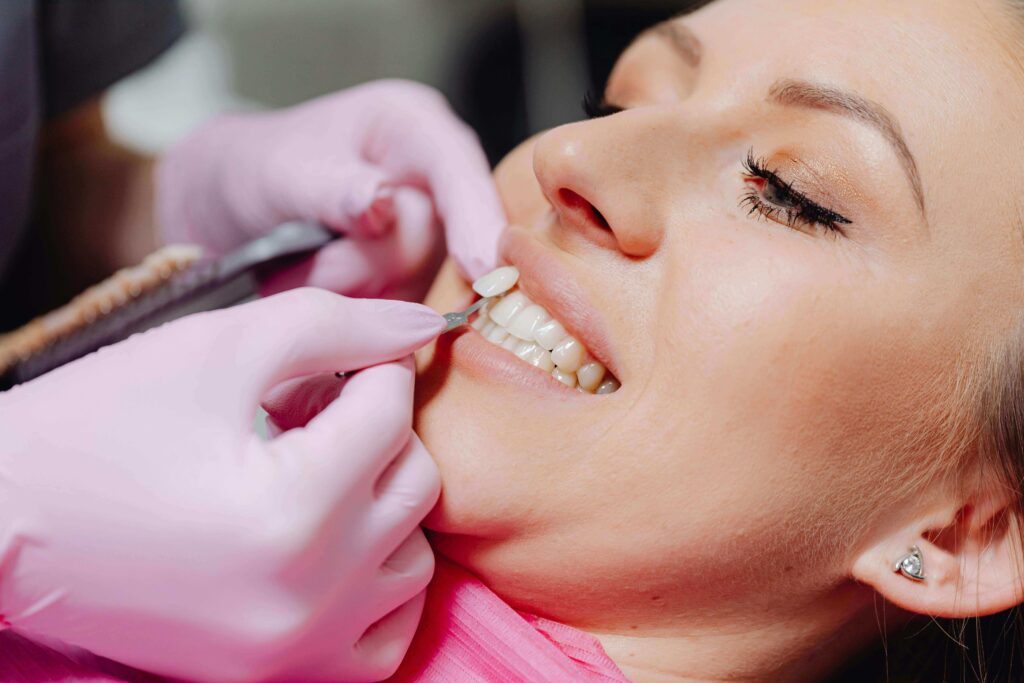
How to whiten teeth at home
- Take-home trays from a dental practitioner. Custom trays fit your teeth closely and hold a professional-strength gel against them for a set time each day. Results build up over one to two weeks.
- Shop-bought kits and strips. Kits sold in pharmacies, supermarkets and online contain lower-strength ingredients, because only registered dental practitioners can use products with more than 6% hydrogen peroxide. Results are slower, and trays that do not fit well can let gel irritate the gums.
- Whitening toothpaste. It helps remove surface stain but does not change the natural colour of the teeth.
Read professional teeth whitening vs at-home kits for a side-by-side comparison.
Does baking soda whiten teeth?
Baking soda, also called bicarbonate of soda, is mildly abrasive. Brushing with it can lift some surface stain, which makes teeth look a little cleaner. It does not bleach the tooth, so it will not change the underlying colour. Healthdirect advises that frequent use of baking soda may damage your teeth, and it contains no fluoride, so it should not replace your toothpaste.
Home remedies to avoid
- Lemon juice, vinegar and other fruit acids. Acid dissolves enamel. Teeth end up thinner, more sensitive and more yellow.
- Charcoal powders. These are abrasive, often contain no fluoride, and can wear enamel with frequent use.
- Baking soda mixed with lemon juice or hydrogen peroxide. This combines an abrasive with an acid or an uncontrolled bleach, and can injure the gums.
- High-strength gels bought online. Products stronger than the legal limit for home use can burn the gums and lips.
Is whitening teeth at home suitable?
Whitening is generally suitable when your mouth has been checked first and you follow the instructions. Possible side effects are temporary sensitivity to cold and irritation of the gums. Whitening can make existing problems worse, such as cracked teeth or untreated decay, and it is not recommended during pregnancy or breastfeeding.
Whitening does not change the colour of crowns, veneers or fillings.
Why have a check-up first?
Staining has different causes, and whitening only treats some of them. Surface stain and tartar come off with a professional clean. Dark marks can be decay. A check-up tells you what is causing the colour and whether whitening will help. See how to remove stains from teeth.
FAQs
What is the suitable way to whiten teeth at home?
Custom take-home trays with gel supplied by a dental practitioner give the most predictable result of the home options.
How long does home whitening take?
With custom trays, usually one to two weeks of daily wear. Shop-bought products take longer and the change is smaller.
Can I use household products to whiten my teeth?
It is not recommended. Household products either do not bleach the tooth or damage the enamel.
Teeth whitening in Penrith
To find out whether whitening is suitable for you, book a consultation at Penrith Dental Care. See how much teeth whitening costs, read about teeth whitening in Penrith and our guide to teeth whitening in Australia.
Source: Healthdirect Australia, Teeth whitening (last reviewed February 2025). This article is general information only and does not replace an assessment with a registered dental practitioner.
Looking for more dental health tips? Browse all articles on the Penrith Dental Care blog, or meet the Penrith Dental Care team. Have a question? See our dental FAQ.
Reviewed by Mina Gibryal, Penrith Dental Care, October 2026. This article is general information and does not replace advice from your own dental practitioner.