
How to clean dentures: take them out, brush every surface with a soft brush and mild soap and water, rinse them, and leave them out overnight. Dentures collect plaque and food just as natural teeth do, and a clean denture is more comfortable and kinder to your gums. This guide covers daily cleaning, what to avoid and when to have your dentures checked.
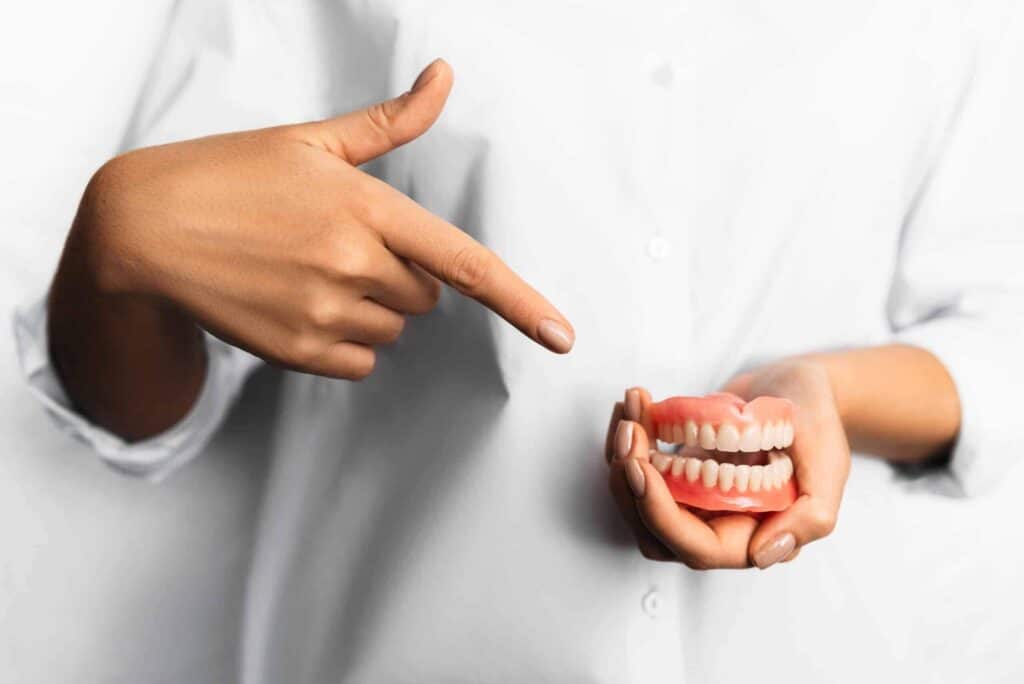
How to clean dentures each day
- Clean your dentures twice a day, in the morning and before bed, and rinse them after eating.
- Always take the denture out to clean it.
- Clean it over a basin half filled with water or over a folded towel, so it does not break if you drop it.
- Brush all surfaces, including the side that sits against your gums, with a soft toothbrush or denture brush and mild soap and water.
- Rinse well before putting it back in.
- Brush any remaining natural teeth, your gums and your tongue with a soft toothbrush.
What not to use on dentures
- Ordinary toothpaste. It is abrasive and can scratch the denture surface, and scratches hold stain and plaque.
- Hot or boiling water. Heat can warp a denture so it no longer fits.
- Household bleach. It can discolour the pink acrylic and corrode metal clasps.
- Stiff brushes and scourers. These roughen the surface.
How to clean dentures naturally
Mild soap and water with a soft brush is the simplest method and needs no special products. People often ask about two household options:
- Baking soda. Dissolved in water it can help with odour, but scrubbing with dry powder is abrasive. Use it as a soak, not a scrub.
- White vinegar. A diluted vinegar soak can loosen hard deposits on a full acrylic denture. Rinse thoroughly afterwards, and do not use it on dentures with metal parts.
Denture-cleaning tablets are also fine if you follow the instructions and rinse the denture before wearing it. If hard deposits or stains do not shift, bring the denture in for a professional clean.
Should I take my dentures out at night?
Yes. Removing your dentures before bed gives your gums time to rest and lowers the risk of irritation and fungal infection. Store them in a clean, dry container or in water, as your dental practitioner advises.
When to have your dentures checked
See your dentist or dental prosthetist if you have a sore mouth, bleeding gums, swelling or ulcers, or if your denture is loose, cracked or rubbing. Gums and bone change shape over time, so dentures need checking about once a year and may need adjusting or relining. Do not try to adjust or repair a denture yourself.
Denture cleaning FAQs
Can I use toothpaste on false teeth?
It is suitable not to. Toothpaste can scratch the surface. Use mild soap and water or a denture cleaner.
How do I remove stains from dentures?
Daily brushing prevents most staining. For stains that have built up, a denture-cleaning soak may help, and we can clean and polish the denture professionally.
How long do dentures last?
It varies. Dentures wear and the mouth changes shape, so most need relining or replacing after some years. Regular checks tell you when.
Dentures in Penrith
If your dentures are loose, sore or worn, book an appointment at Penrith Dental Care. Read more about dentures in Penrith and other ways to replace missing teeth, including dental implants.
Source: Healthdirect Australia, Dentures (last reviewed February 2025). This article is general information only and does not replace an assessment with a registered dental practitioner.
Looking for more dental health tips? Browse all articles on the Penrith Dental Care blog, or meet the Penrith Dental Care team. Have a question? See our dental FAQ.
Reviewed by Mina Gibryal, Penrith Dental Care, October 2026. This article is general information and does not replace advice from your own dental practitioner.