
If you have lost one or more teeth, there are several ways to replace them. This guide compares the main types of false teeth so you know what to ask about at your consultation. The right option depends on how many teeth are missing, the health of your gums and bone, and your preferences.
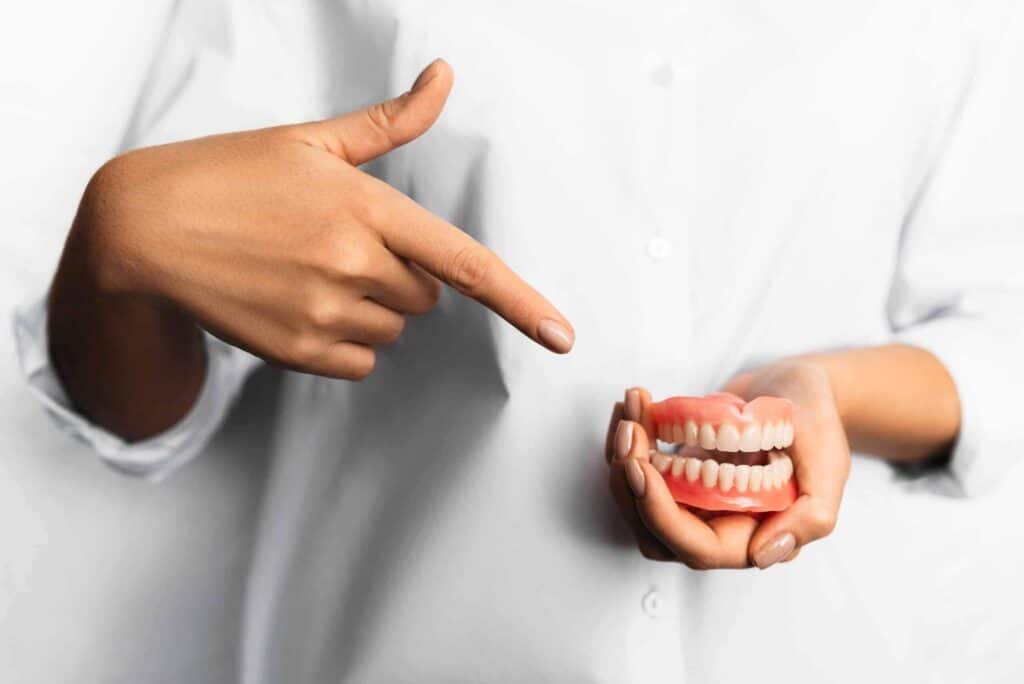
1. Full dentures
A full denture replaces all the teeth in the upper or lower jaw. It sits on the gums and is held in place by suction and the muscles of the mouth. Upper dentures are usually more stable than lower ones.
- Removable and suitable for most people
- Lower dentures can move when eating
- Need relining or replacing over time as the jaw changes
2. Partial dentures
A partial denture replaces some teeth and clips onto the remaining natural teeth. They can be made from acrylic (plastic) or with a cobalt chrome metal frame, which is thinner and often more comfortable.
3. Immediate dentures
An immediate denture is made before teeth are removed and fitted on the same day, so you are not without teeth while you heal. It usually needs adjusting or relining as the gums settle.
4. Dental bridges
A bridge is fixed in place and uses the teeth on either side of a gap to support a replacement tooth. It does not come out, but the supporting teeth usually need to be shaped for crowns. Learn more about dental bridges in Penrith.
5. Dental implants
An implant is a small titanium post placed in the jawbone that supports a crown, bridge or denture. Implants do not rely on neighbouring teeth and help preserve the bone. They involve surgery and take several months to complete. See dental implants in Penrith and how long dental implants last.
6. Implant-retained dentures
Two or more implants can be used to clip a denture into place. This is often considered for people whose lower full denture moves a lot.
Which type of false teeth is right for you?
A dentist will look at your remaining teeth, gums and bone, usually with X-rays, before recommending an option. Costs vary widely between treatments, so you will receive a written treatment plan and estimate before you start. Find out more about dentures at Penrith Dental Care.
Caring for false teeth
Removable dentures should be cleaned daily and taken out at night. See our guide on how to clean dentures. Bridges and implants are cleaned like natural teeth, with extra care around the gum line.
Thinking about replacing missing teeth?
Book a consultation to talk through which type of false teeth suits you. Call (02) 4733 1197 or book an appointment online.
For more general health information, see healthdirect: dentures.
Related reading
- Dental implants vs dentures
- Dentures Penrith
- Dental Implants Penrith
- How to clean dentures
- How long do dental implants last?
Looking for more dental health tips? Browse all articles on the Penrith Dental Care blog, or meet the Penrith Dental Care team. Have a question? See our dental FAQ.
This article is general information and does not replace advice from your own dental practitioner.