
Receding gums are when the gum pulls back from the tooth and exposes more of the tooth or its root. A common question is whether gums grow back. The short answer is no: lost gum tissue does not regrow on its own. The good news is that recession can usually be slowed or stopped, and there are treatments for exposed roots.
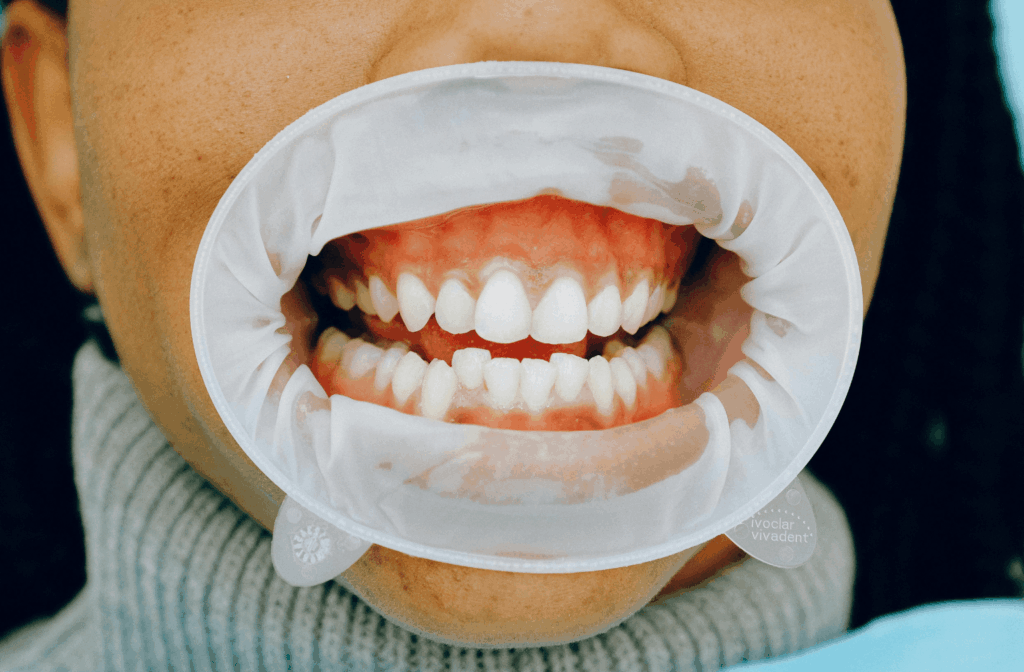
Signs of receding gums
- Teeth that look longer than they used to
- Sensitivity to cold, especially near the gum line
- A notch or ledge you can feel where the tooth meets the gum
- Dark triangular gaps between teeth – see black triangles between teeth
- Bleeding or swollen gums, if gum disease is involved
What causes gum recession?
- Gum disease – the most important cause to rule out. See gum disease signs and stages.
- Brushing too hard or using a hard-bristled toothbrush.
- Teeth grinding or clenching – see teeth grinding treatment.
- Thin gums – some people naturally have thinner gum tissue.
- Tooth position – teeth that sit further out, or that have been moved with orthodontics.
- Smoking and vaping, and lip or tongue piercings.
Can receding gums be treated?
Treatment focuses on stopping the cause and protecting the exposed root:
- Treating gum disease with a professional scale and clean and, where needed, gum disease treatment.
- Changing your brushing technique – a soft toothbrush, gentle pressure and small circles.
- Desensitising toothpaste or in-chair treatments for sensitivity.
- Tooth-coloured bonding to cover worn or notched root surfaces – see composite bonding.
- A night splint if grinding is a factor.
- Gum grafting – a surgical procedure, usually performed by a periodontist, to cover exposed roots in suitable cases.
How to prevent further recession
- Brush twice a day with a soft brush and fluoride toothpaste.
- Clean between your teeth daily – see bleeding gums when flossing.
- Do not smoke or vape.
- Have regular check-ups so changes can be measured over time.
Noticed your gums pulling back?
The team at Penrith Dental Care can check what is going on and talk you through your options. Call (02) 4733 1197 or book an appointment online.
For more general health information, see healthdirect: gum disease.
Related reading
- Gum disease: signs, stages and treatment
- What causes tooth sensitivity?
- Black triangles between teeth
- Gum Disease Treatment Penrith
Looking for more dental health tips? Browse all articles on the Penrith Dental Care blog, or meet the Penrith Dental Care team. Have a question? See our dental FAQ.
This article is general information and does not replace advice from your own dental practitioner.