
Black triangle teeth is the common name for small triangular gaps between the teeth at the gum line. They appear when the gum no longer fills the space between two teeth, so the dark of the mouth shows through. This guide explains why black triangles form, whether they are a problem, and what can be done about them.
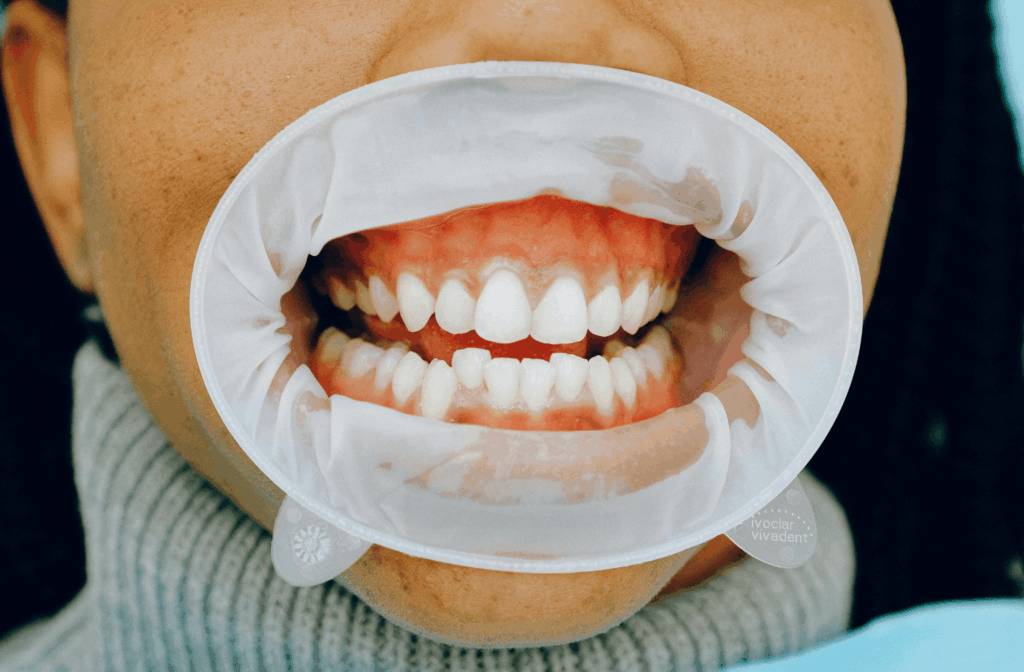
What are black triangles between teeth?
Between each pair of teeth there is a small point of gum. When that point shrinks, or when the teeth only touch near their biting edges, a gap opens underneath the contact. The gap looks dark, which is where the name comes from. Dentists call these open gingival embrasures.
What causes black triangles?
- Gum disease. Gum disease destroys the bone and gum between the teeth, and the gum does not grow back to its original height.
- Gum recession. Gums can recede with age, from brushing too hard, or after gum treatment as swollen gums shrink back to a healthy size.
- Tooth shape. Teeth that are wide at the biting edge and narrow at the gum line leave more space to fill.
- Orthodontic treatment. When overlapping teeth are straightened, gaps that were hidden by the overlap can become visible.
- Missing bone between the teeth. The gum follows the bone, so where bone has been lost the gum sits lower.
Are black triangles a problem?
For many people the concern is appearance. Black triangles can also trap food and plaque, which makes the area harder to keep clean. Because gum disease is a common cause, a new or widening gap is a reason to have your gums checked. See gum disease treatment.
How are black triangles treated?
The right option depends on the cause and the size of the gap. Any gum disease is treated first.
- Composite bonding. Tooth-coloured resin is added to the sides of the teeth to reshape them and close or reduce the gap. It usually takes one visit and does not require the tooth to be cut down. See composite bonding.
- Bioclear method. A form of composite treatment that uses clear, shaped matrices to wrap the composite around the tooth, and is commonly used for black triangles. See Bioclear in Penrith.
- Veneers or crowns. These can change the shape of the teeth where a larger change is wanted or the teeth are already heavily filled. See veneers.
- Orthodontic treatment. Reshaping the sides of the teeth slightly and moving them together can bring the contact point closer to the gum. See orthodontic treatment with clear aligners.
- Gum surgery. In selected cases a specialist periodontist can rebuild lost gum tissue. Results between the teeth are less predictable than on the front surface of a tooth.
Each option has limits and risks, and not every gap can be closed completely. An examination is needed before anyone can tell you what is realistic for your teeth.
Can black triangles be prevented?
- Brush gently with a soft toothbrush. Scrubbing hard wears the gums away.
- Clean between your teeth every day with floss or an interdental brush of the right size. A brush that is too large can push the gum down.
- Have regular check-ups and cleans so gum disease is found early.
- Do not smoke. Smoking increases the risk of gum disease.
Black triangle FAQs
Do black triangles go away on their own?
No. Once the gum between the teeth has been lost it does not usually grow back without treatment.
Do clear aligners or braces cause black triangles?
Straightening crowded teeth can reveal gaps that were hidden while the teeth overlapped. This is discussed before orthodontic treatment starts, and the gaps can often be reduced as part of the treatment or with bonding afterwards.
Is bonding for black triangles long-term?
No. Bonding can chip or stain over time and may need polishing, repair or replacement.
Are black triangles a sign of gum disease?
They can be. Gum disease is one of several causes, so it is worth having your gums examined.
Black triangles: your options in Penrith
If gaps near your gum line bother you, book a consultation so we can find the cause and go through the options that suit your teeth. Contact Penrith Dental Care or call (02) 4733 1197.
Any surgical or invasive procedure carries risks. Before proceeding, you should seek a second opinion from an appropriately qualified health practitioner.
This article is general information only and does not replace an assessment with a registered dental practitioner.
Looking for more dental health tips? Browse all articles on the Penrith Dental Care blog, or meet the Penrith Dental Care team. Have a question? See our dental FAQ.
Reviewed by Mina Gibryal, Penrith Dental Care, October 2026. This article is general information and does not replace advice from your own dental practitioner.