
Teeth braces are fixed orthodontic appliances that move teeth into a better position over time. They are used to correct crowding, gaps and bite problems in children, teenagers and adults. This guide explains how orthodontic braces work, the main types, how long treatment takes and when clear aligners are an alternative.
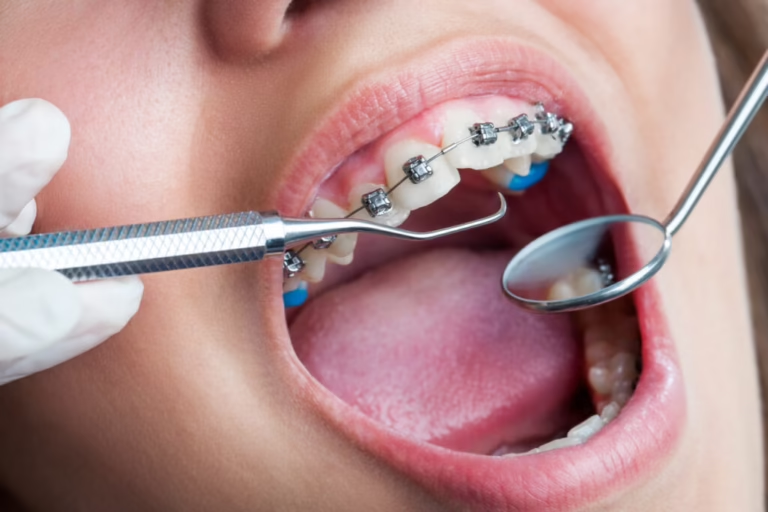
How do braces work?
Braces apply gentle, steady pressure to the teeth. Small brackets are bonded to each tooth and joined by a thin wire. The wire tries to return to its original shape and, as it does, it guides the teeth along with it. The bone around each tooth slowly remodels to hold the tooth in its new place. The orthodontist adjusts or changes the wire every few weeks to keep the teeth moving.
Types of orthodontic braces
- Metal braces. Stainless steel brackets and wires on the front of the teeth. They are the most common type and suit almost every kind of tooth movement.
- Ceramic braces. Clear or tooth-coloured brackets that work in the same way and are less noticeable.
- Lingual braces. Brackets fixed to the back of the teeth, so they cannot be seen from the front.
- Clear aligners. Not braces, but an alternative: a series of thin, removable plastic trays that move the teeth in small stages.
How long do braces take?
Treatment usually takes about one to three years, depending on how far the teeth need to move and how the bite needs to change. Regular adjustment visits are needed throughout.
What problems do dental braces treat?
- crowded or overlapping teeth
- gaps between teeth
- upper front teeth that stick out
- underbites, crossbites and open bites
- teeth that have come through in the wrong position
Braces or clear aligners?
Both can straighten teeth. Braces stay on the teeth for the whole treatment and can handle more complex movements. Aligners are removable, so you take them out to eat and clean your teeth, but they only work if they are worn for most of the day and night. Which is suitable depends on your bite and can only be decided after an examination. Read Invisalign vs braces for a fuller comparison.
At Penrith Dental Care, orthodontic treatment is provided by general dentists using Invisalign and clear aligners for suitable patients. We do not fit fixed braces. If braces or specialist care would suit you better, we will tell you and arrange a referral to a specialist orthodontist. See orthodontic treatment in Penrith and Invisalign in Penrith.
Looking after teeth with braces
- Brush after every meal, cleaning above and below the brackets.
- Clean between the teeth and under the wire with interdental brushes.
- Avoid hard, sticky and chewy foods that can break brackets. See what can you eat with braces?.
- Keep up your regular dental check-ups and cleans during treatment.
- Wear a mouthguard for sport.
Braces FAQs
How do you get braces?
Start with a dental check-up. Your dentist can assess your teeth and refer you to an orthodontist, or you can see an orthodontist directly without a referral.
Do braces hurt?
Teeth usually feel tender for a few days after braces are fitted and after each adjustment. Soft food and ordinary pain relief help.
What age can you have braces?
Most treatment starts between 11 and 14, but adults can be treated too. See what age should children get braces or aligners?.
Will I need a retainer after braces?
Yes. Teeth can move back after treatment, so retainers are needed to hold them in position.
Teeth straightening in Penrith
To find out which options suit your teeth, book a consultation at Penrith Dental Care.
Any orthodontic treatment carries risks. Results vary between individuals. Before proceeding, you should seek a second opinion from an appropriately qualified health practitioner.
Source: Healthdirect Australia, Orthodontic treatments (last reviewed February 2025). This article is general information only and does not replace an assessment with a registered dental practitioner.
Looking for more dental health tips? Browse all articles on the Penrith Dental Care blog, or meet the Penrith Dental Care team. Have a question? See our dental FAQ.
Reviewed by Mina Gibryal, Penrith Dental Care, October 2026. This article is general information and does not replace advice from your own dental practitioner.